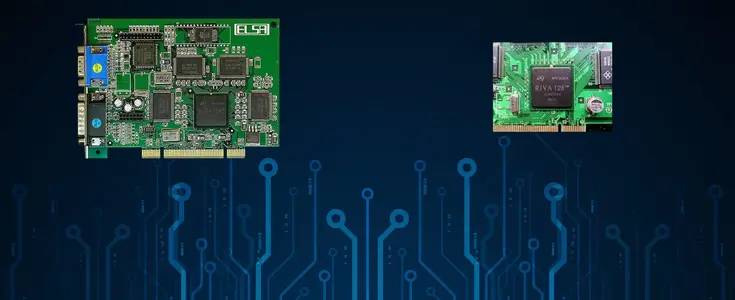
The Nvidia RIVA 128 (NV3), launched in April 1997, was a landmark consumer graphics card that pioneered the integration of high-performance 3D acceleration with 2D and video capabilities. It featured 4MB of SGRAM, a 100MHz core/memory clock, and a…
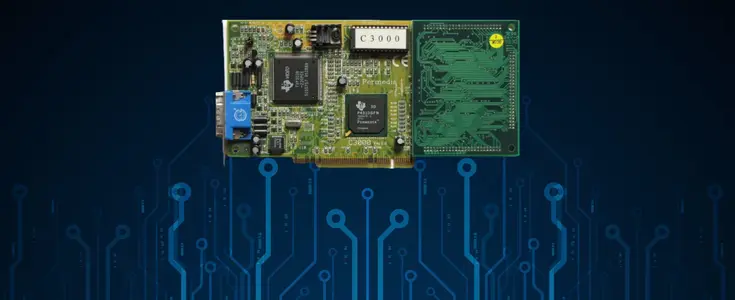
The 3Dlabs Permedia series was a line of graphics accelerator chips released in the mid-to-late 1990s, aimed at bridging the gap between professional, high-end 3D workstation graphics (such as 3Dlabs' own GLINT series) and the emerging…
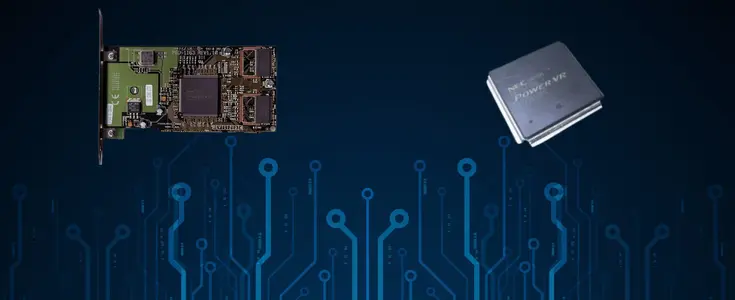
The PowerVR PCX1 is a first-generation 3D graphics accelerator chip developed jointly by NEC and VideoLogic, released in 1996. It was one of the earliest consumer 3D accelerators, designed to compete with the 3dfx Voodoo and Rendition Verite. Unlike its…
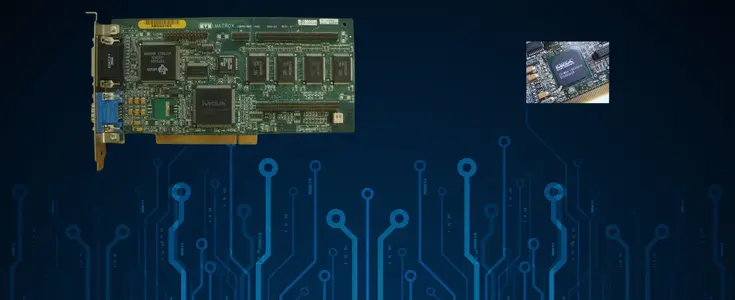
The Matrox Mystique is a 64-bit 2D/3D graphics accelerator card released in August 1996, designed for desktop PCs as a mid-range consumer and business solution. It was a successor to the professional-focused Matrox Millennium, offering excellent 2D…
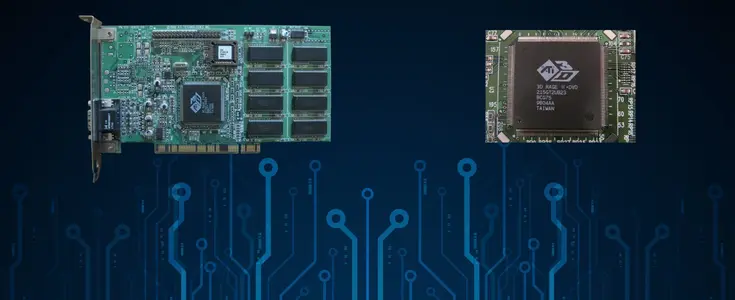
The ATI 3D Rage II (launched September 1996) was a second-generation graphics accelerator from ATI Technologies designed to provide 2D acceleration, 3D acceleration, and MPEG-2 video playback in a single, budget-friendly PCI card. Built on a 500 nm…
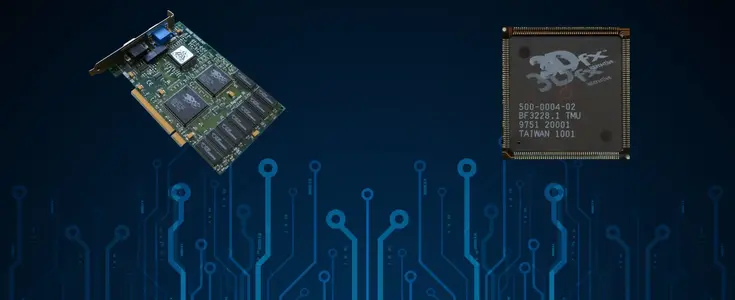
The 3dfx Voodoo Graphics (often simply called Voodoo1) is one of the most iconic and influential 3D accelerator cards of the late 1990s. Released in 1996, it marked a turning point in PC gaming by delivering true hardware‑accelerated 3D graphics at a…
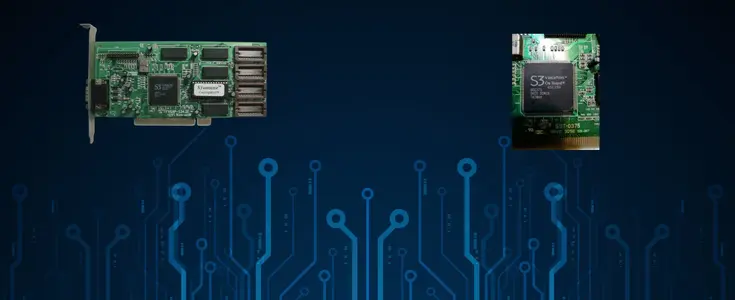
The S3 ViRGE (Virtual Reality Graphics Engine) series, introduced in 1995–1996, was one of the first mainstream 2D/3D accelerator chipsets, succeeding the popular Trio64V+. While offering excellent 2D performance, its 3D capabilities were disappointing…